
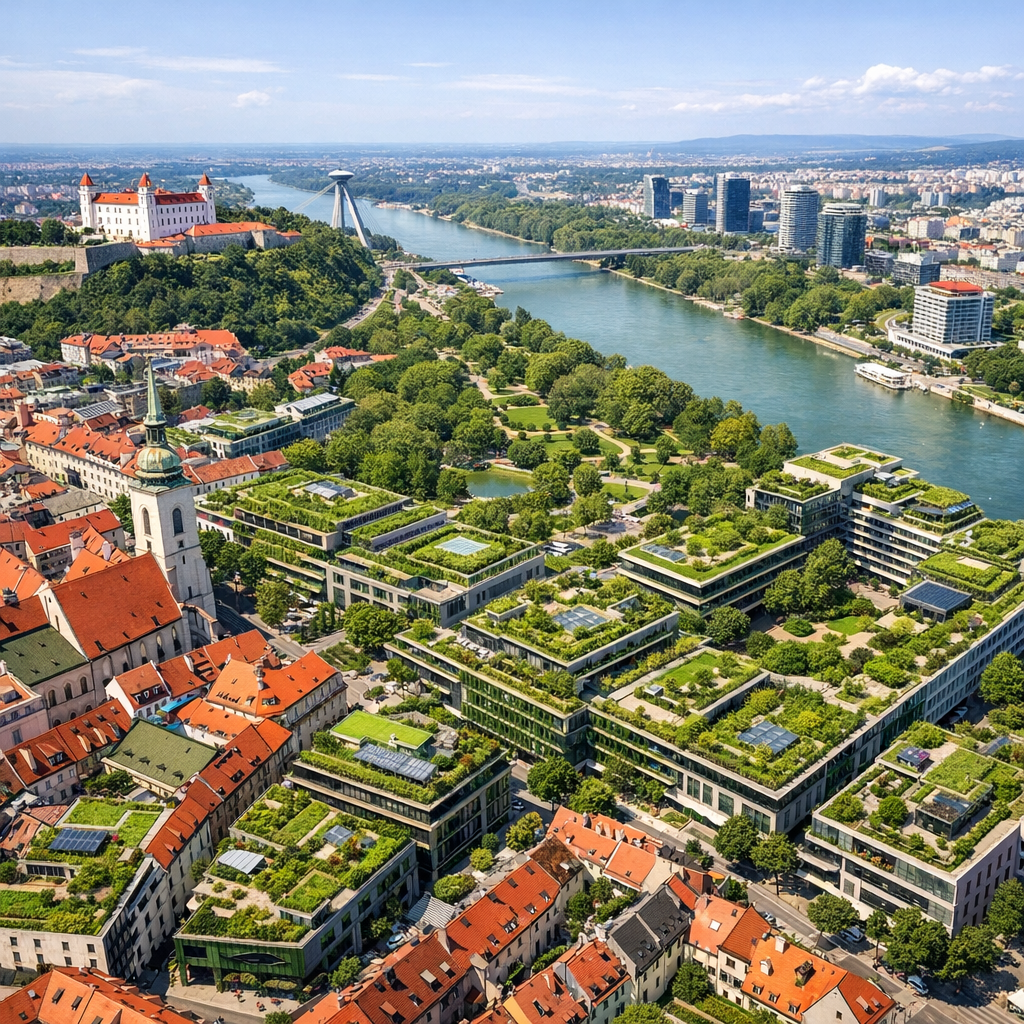
As Bratislava continues to grow and urbanize, residents may notice that the city feels warmer than surrounding rural areas. This phenomenon, known as the urban heat island (UHI) effect, occurs when urban environments experience higher temperatures due to human activities and infrastructure.
Understanding the Urban Heat Island Effect
The UHI effect arises from several factors:
- Heat-Absorbing Materials: Urban surfaces like asphalt and concrete absorb and retain heat, leading to higher temperatures compared to vegetated areas.
- Reduced Vegetation: The replacement of natural landscapes with buildings and roads decreases the cooling effects of plants and trees.
- Waste Heat: Emissions from vehicles, industrial activities, and air conditioning units contribute additional heat to the urban environment.
These factors combine to make cities warmer than their rural counterparts, especially during the night when heat is released from urban structures.
Impacts on Bratislava
In Bratislava, the UHI effect can lead to:
- Increased Energy Consumption: Higher temperatures may result in greater use of air conditioning, leading to higher energy costs and increased greenhouse gas emissions.
- Health Risks: Elevated temperatures can exacerbate heat-related illnesses, particularly among vulnerable populations such as the elderly and those with pre-existing health conditions.
- Environmental Stress: Warmer urban temperatures can negatively affect local flora and fauna, disrupting ecosystems.
Strategies for Mitigation
To combat the UHI effect, Bratislava can consider implementing the following strategies:
Enhancing Green Spaces
Increasing the number of parks, green roofs, and urban gardens can provide shade and promote evaporative cooling, reducing overall city temperatures.
Implementing Cool Roofs and Pavements
Utilizing materials with high reflectivity for roofs and pavements can decrease heat absorption. Light-colored or reflective surfaces can significantly lower surface temperatures.
Promoting Sustainable Urban Planning
Designing urban areas with adequate ventilation corridors and preserving natural landscapes can help dissipate heat and maintain cooler urban environments.
Encouraging Public Transportation and Energy Efficiency
Reducing reliance on personal vehicles and promoting energy-efficient practices can decrease waste heat emissions, contributing to a cooler city.
By adopting these measures, Bratislava can mitigate the urban heat island effect, enhancing the quality of life for its residents and promoting a more sustainable urban environment.