

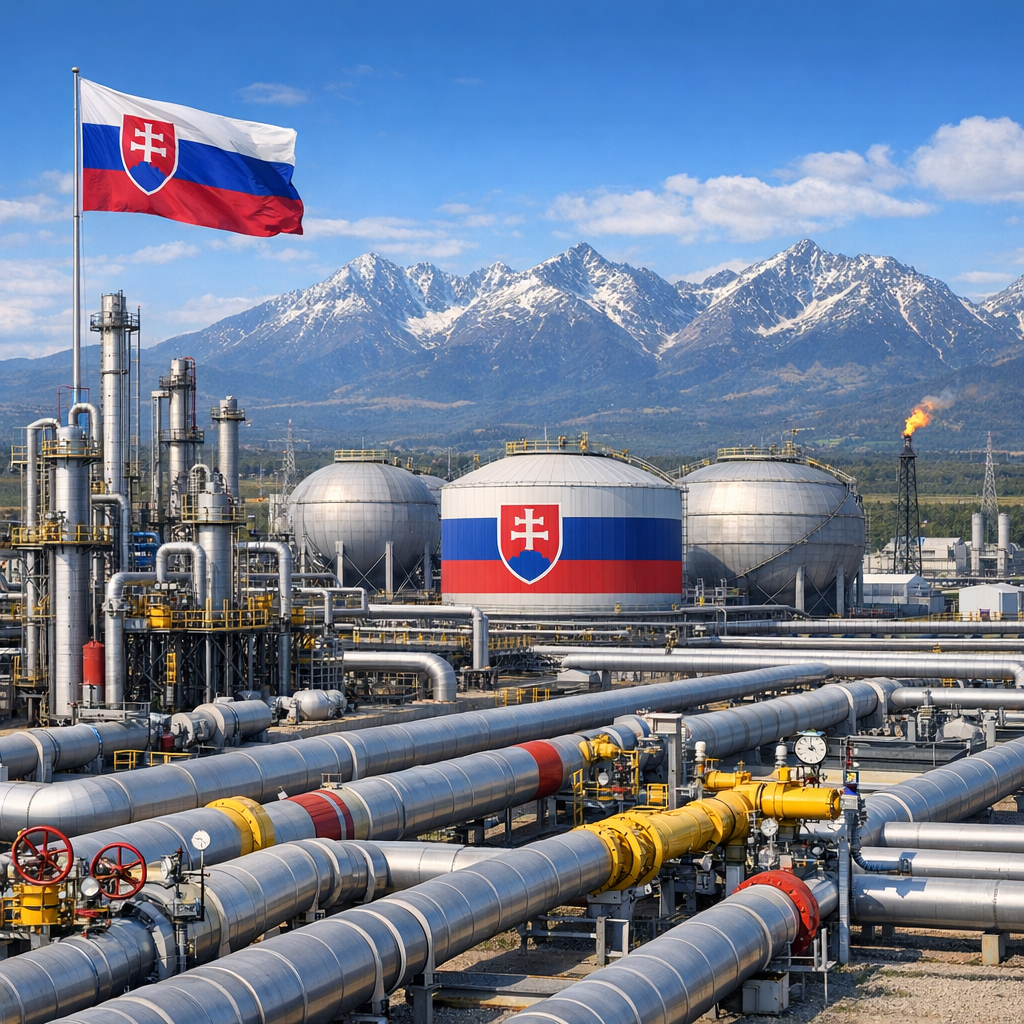
Slovakia’s energy landscape is undergoing significant transformations due to global events and regional developments. The nation’s reliance on Russian fossil fuels has been a focal point, especially in light of recent disruptions and geopolitical tensions.
Dependence on Russian Energy
Historically, Slovakia has heavily depended on Russian energy imports. In 2025, over half of the country’s natural gas imports originated from Russia. Additionally, Slovakia’s crude oil supply has been almost entirely reliant on Russian deliveries through the Druzhba pipeline, under a long-term contract valid until the end of 2029.
Disruptions and Diversification Efforts
In early 2026, the Druzhba pipeline faced significant disruptions due to attacks, leading to halts in oil flows to Central Europe. These incidents exposed vulnerabilities in Slovakia’s energy infrastructure and underscored the urgent need for diversification. In response, Slovakia has been exploring alternative supply routes, including the Adria pipeline from Croatia. Despite its underutilization in the past, the Adria pipeline demonstrated its technical feasibility during the Druzhba disruptions, maintaining Slovakia’s oil supply and even allowing for the replenishment of emergency stocks.
Policy Responses and Future Outlook
The Slovak government has been proactive in addressing these challenges. Measures include expanding contracts with international energy companies and liquefied natural gas suppliers to reduce dependence on Russian sources. However, the path to full diversification is complex, involving infrastructure adaptations and regional cooperation. Accelerating these efforts is crucial for enhancing Slovakia’s energy security and mitigating future risks.
As global energy dynamics continue to evolve, Slovakia’s strategic decisions in the coming years will play a pivotal role in ensuring a stable and secure energy future for the nation.