

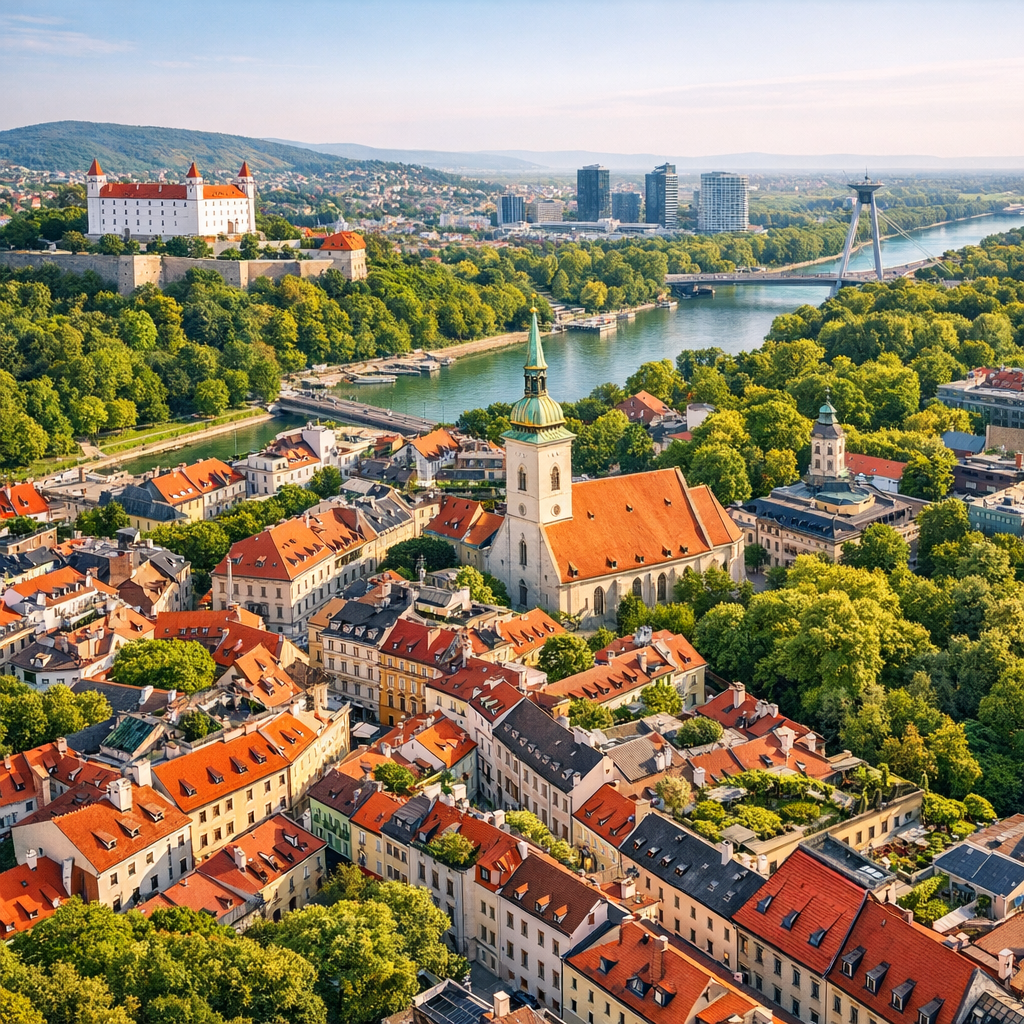
As Bratislava continues to grow and urbanize, residents may notice that the city feels warmer than surrounding rural areas. This phenomenon, known as the Urban Heat Island (UHI) effect, occurs when urban environments experience higher temperatures due to human activities and infrastructure.
What Causes the Urban Heat Island Effect?
Several factors contribute to the UHI effect:
- Building Materials: Urban structures often use materials like concrete and asphalt, which absorb and retain heat more than natural landscapes.
- Reduced Vegetation: The replacement of green spaces with buildings and roads decreases the cooling effects of plants and trees.
- Human Activities: Energy consumption from vehicles, air conditioning, and industrial processes releases additional heat into the environment.
Impacts on Bratislava
The UHI effect can lead to several challenges for Bratislava:
- Increased Energy Demand: Higher temperatures can result in greater use of air conditioning, leading to higher energy consumption.
- Health Risks: Elevated temperatures can exacerbate heat-related illnesses, particularly among vulnerable populations.
- Environmental Concerns: Warmer urban areas can affect local ecosystems and contribute to poorer air quality.
Mitigation Strategies
To address the UHI effect, Bratislava has implemented several initiatives:
- Green Spaces: Expanding parks and planting trees to provide shade and promote cooling through evapotranspiration.
- Green Roofs: Encouraging the installation of vegetation on rooftops to reduce heat absorption.
- Reflective Materials: Using lighter-colored building materials and pavements to reflect more sunlight and absorb less heat.
These efforts are part of the city’s broader commitment to sustainability and climate resilience, as outlined in the Bratislava Climate Plan. The plan aims to reduce greenhouse gas emissions by 55% by 2030 compared to 2005 levels and prepare the city to achieve climate neutrality by 2050.
Community Involvement
Residents can also play a role in mitigating the UHI effect by:
- Planting trees and maintaining gardens.
- Using energy-efficient appliances to reduce waste heat.
- Supporting local policies aimed at increasing urban greenery and sustainable development.
By understanding and addressing the Urban Heat Island effect, Bratislava can enhance the quality of life for its residents and promote a healthier, more sustainable urban environment.